Why You Can’t Just “Pick Up” Czech by Listening: My Path to Your Fluency
Many expats arrive in the Czech Republic hoping to learn the language naturally—simply by listening to people on the tram or at the grocery store. However, the truth is that Czech is far too complex to be learned by “osmosis” alone. Its grammatical structure is more like intricate architecture than a simple puzzle. Without a solid foundation, it’s easy to get lost. Even with a textbook you could have a problem to understand Czech grammar.
In my individual lessons, I focus on a clear system, clarity, and constant support. Here is what our journey together looks like:
1. Building from the Ground Up: Alphabet and Pronunciation
With every new student, I start at the very beginning—the Czech alphabet. You might feel you already know it, but I need to be sure. Correct pronunciation is the key to being understood by locals and gaining the courage to speak. You cannot build a house without a solid foundation.
2. The First Pillars of Grammar
Once we master the alphabet, we move on to the essential grammar you need for daily life. We focus on:
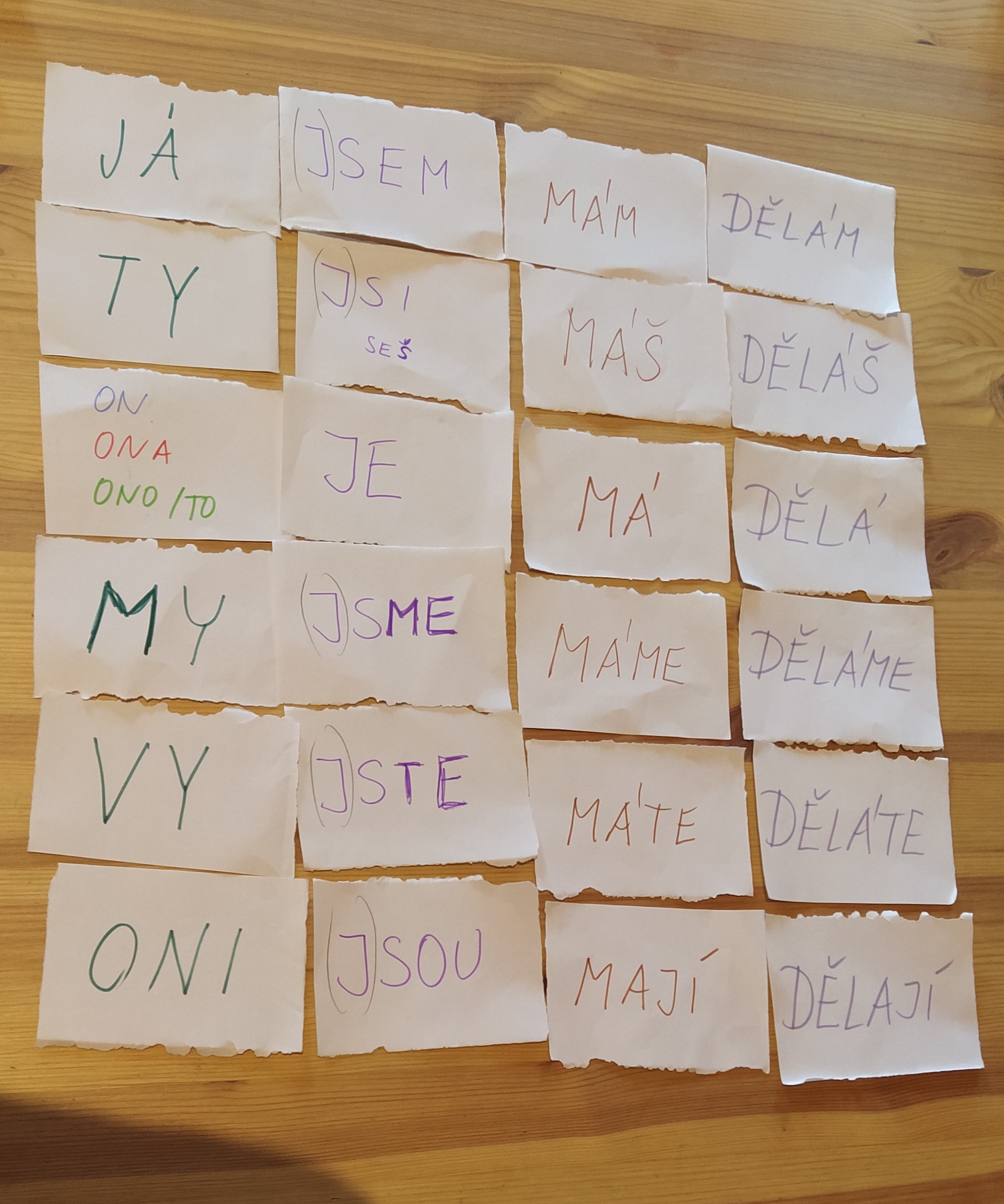
- Key Verbs: Být (to be), mít (to have), and other high-frequency verbs that form the backbone of every sentence.
- Social Codes: We explain the difference between formal and informal address (vykání and tykání). This isn’t just about grammar; it’s about understanding Czech culture and respect.
- Gender of Nouns: I will teach you how to recognize masculine, feminine, and neuter without your head spinning.
3. A Plan Tailored to Your Needs
Once these basics are settled, you set the pace and direction. Every student is unique. Some need to focus on professional language for work, while others want to understand the teachers at their children’s school. We proceed based on what matters most to you.
I like to use Czech Step by Step, because I know it best, but any Czech textbook could be used. And I combine that with exercises and videos.
4. Preparing for the A2 Exam (Permanent Residency)
Is your Czech exam date approaching? If so, we switch to a specialized mode. We focus directly on the specific types of tasks found in the exam. We practice listening, writing, and reading so that nothing surprises you on the big day.
5. Speaking: The Hardest but Most Important Part
In my lessons, we talk. A lot. Speaking is the most difficult discipline in Czech, but it’s the one that gives you freedom. We break down barriers, get rid of the fear of making mistakes, and practice real-life situations.
So this is my way how to teach 🙂
Hello, good day . You explained very well, I would like to know more about czech , its really hard for me specially in communication.